
Abatement Technologies Air Duct Cleaning in Seattle: A Homeowner’s Guide
Abatement Technologies air duct cleaning equipment in Seattle typically refers to negative air machines and HEPA-filtered contact vacuums that pull debris from ductwork under controlled suction. A proper cleaning with this class of equipment should include before-and-after camera verification, documented airflow readings, and filter weight logs that prove contamination was actually removed, not just stirred around. If you’d rather not spend your Saturday cross-checking contractor credentials, Bellows Air Duct & Vent Co. of Seattle offers free estimates - call (833) 700-5198.
Here’s the thing we’ve learned in 42 years: the same Abatement Technologies HEPA-AIRE portable negative air machine that produces excellent results in one truck produces theater in another. The difference is never the brand name on the side of the van. We’ve been called behind discount operators in Magnolia, Ravenna, and out along the Sammamish Plateau where homeowners paid for a “full Abatement Technologies cleaning” and wound up with brushed-off registers and a fogged sanitizer bill. The equipment was real. The cleaning was not.
What Abatement Technologies Equipment Actually Does
Abatement Technologies builds three main tool classes for residential duct cleaning: portable negative air machines, HEPA-filtered contact vacuums, and containment systems. None of them are magic. Each does a specific job, and each has limits a trained operator should know.
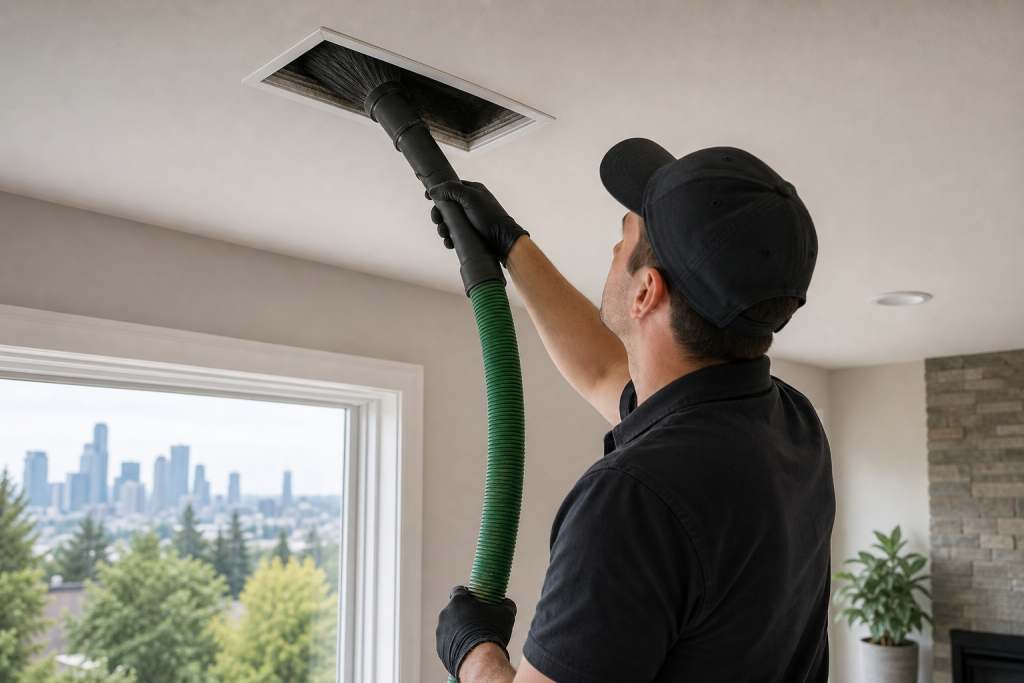
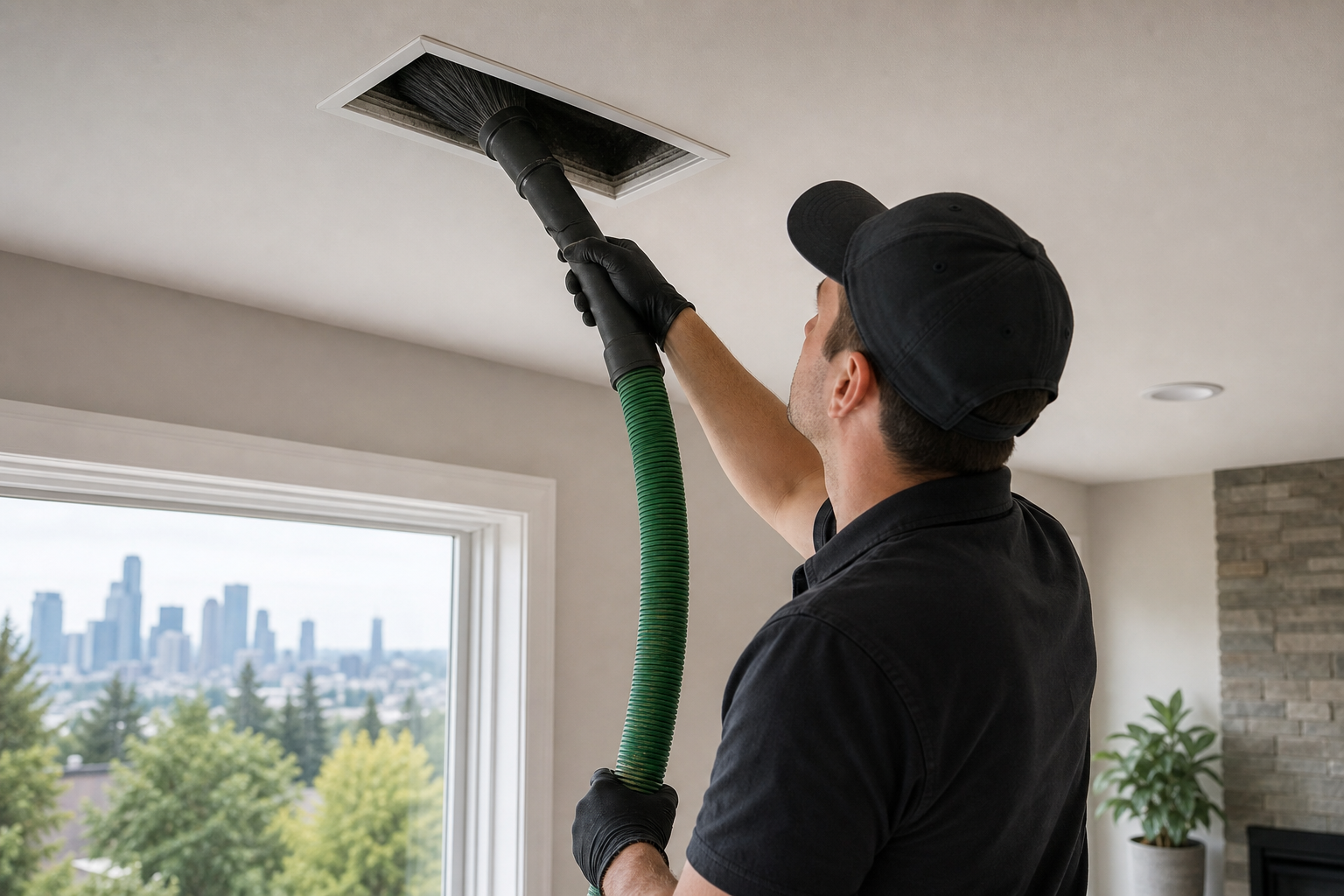
A negative air machine, like the HEPA-AIRE line, creates suction throughout the duct system by connecting to the trunk line near the air handler. It pulls air - and loosened debris - through the entire network toward a single collection point. The machine itself doesn’t scrub anything. It collects what a technician has already broken loose with whips, brushes, or compressed air tools. Without proper agitation upstream, it’s a very expensive fan moving dirty air through clean-looking pipes.
The HEPA filtration matters in Seattle more than most places. Our Puget Sound moisture means mold spores, dust mite fragments, and organic debris stay viable longer than they would in dry climates. A true HEPA collection stage, tested to 99.97% efficiency at 0.3 microns, prevents that material from exhausting back into your living space or the technician’s. Cheaper machines use “HEPA-type” filters - a meaningful difference we verify on every job with filter weight documentation.
Contact vacuums, the third category, are essentially high-suction wands used at individual vents and returns. They’re useful for surface debris and post-agitation cleanup. They’re not a substitute for trunk-line negative air, and any technician presenting them as such is cutting scope.
Why Equipment Brand and Operator Skill Are Separate Credentials
This is where Seattle homeowners get tripped up. A company advertises “Abatement Technologies certified” or “uses professional-grade Abatement equipment,” and the natural assumption is that certification covers both machine and operator. It does not.
Abatement Technologies, like Rotobrush, Nikro, or Aprilaire, manufactures equipment. They certify that a machine meets design specifications. They do not certify that the person holding the hose knows how to size negative air CFM to ductwork volume, recognize when a flex duct has detached under suction, or identify asbestos-containing insulation in a 1950s Wallingford crawl space. Those competencies come from field training, apprenticeship, and ongoing education - the kind we’ve invested in since 1984.
We recommend asking any contractor three questions before scheduling:
- Who trained your technicians on this specific equipment, and for how long? Look for manufacturer training plus in-house apprenticeship, not a weekend video course.
- What documentation do you provide to prove the cleaning worked? Filter weight before and after, camera footage with timestamps, and CFM readings at the supply registers. Anything less is a claim without evidence.
- What happens if I find debris after you leave? A company that stands behind its work answers this immediately, in writing, without escalation to a manager. Our 90-Day Done Right Promise means we return at no charge - no paperwork, no arguing.
We’ve seen technicians with $15,000 in Abatement Technologies equipment on their truck who didn’t know how to seal a return plenum properly. The tools were professional. The result was not.
How Seattle’s Damp Climate Changes the Equation
High-static-pressure extraction isn’t a marketing term here. It’s a necessity.
Seattle’s average relative humidity hovers near 73% through winter months. Ductwork in crawl spaces, attics, and exterior walls runs cooler than ambient air, creating condensation points where dust and organic material bind together. We’ve opened systems in Ballard and Greenwood where the debris layer had the consistency of damp felt - low-suction equipment simply slides over it. High-static-pressure negative air, properly paired with aggressive agitation, pulls that material free.
The moisture context also affects what happens after cleaning. A technician who closes up a damp system without verifying dry conditions has done half a job. We document humidity levels at the air handler and recommend solutions - dehumidistat controls, improved vapor barriers, or sealed ductwork - when the environment will recontaminate quickly.
This is why we specify professional-grade equipment from manufacturers who understand these constraints. Rotobrush brush-and-vac systems serve certain applications. Abatement Technologies negative air serves others. The right tool for the right duct condition - that’s judgment that comes with time in Seattle homes, not a catalog.
Signs the Equipment Was Used Correctly
Homeowners can’t crawl their own ducts to verify. But you can demand documentation that separates a real cleaning from a camera show with a brand-name prop.
- Before-and-after camera footage with timestamps. Not still photos. Not footage from a different house. Date-stamped video showing the same branch line, same orientation, same identifying features.
- Filter weight documentation. The HEPA collection filters on Abatement Technologies machines gain measurable weight during a proper cleaning. We log this on every job. A filter that weighs the same at 4 PM as it did at 9 AM collected nothing.
- Register CFM readings before and after. Restricted airflow is often why homeowners call in the first place. Documented cubic feet per minute at supply registers proves the restriction was addressed, not just the visible debris near the vent cover.
- No fogging without cause. Chemical sanitizers have their place after mechanical cleaning removes the biomass they need to contact. A technician who leads with fogging is covering, not cleaning.
We pulled one job in a Ravenna basement last month where the previous contractor had run a contact vacuum at each register, fogged a vanilla-scented sanitizer, and presented a $400 invoice for “full Abatement Technologies HEPA cleaning.” The trunk line was untouched. The homeowner’s allergy symptoms persisted until we completed the actual work with negative air and brush agitation - documented, camera-verified, filter-weighed.
When to Call a Professional
If you’ve read this far, you probably have a specific concern: visible dust at registers, musty airflow, uneven heating, or a recent remodel that’s left construction debris in the returns. These are legitimate reasons to schedule a proper inspection.
What we don’t recommend: attempting to access or clean your own ductwork beyond basic register vacuuming. Sheet metal edges are sharp. Attic and crawl space work involves electrical, structural, and fall hazards. And without negative air containment, DIY agitation releases everything into your living space at once.
For homeowners in our service area, we also provide Air Duct Cleaning in City of Sammamish, Dryer Vent Cleaning in City of Sammamish, and HVAC Cleaning in City of Sammamish - the same standards, the same documentation, the same 90-Day Done Right Promise.
The Bottom Line
Abatement Technologies equipment is well-regarded because it’s well-built. But a brand name on the side of a van guarantees nothing about what happens inside your ducts. In Seattle’s moisture-heavy environment, high-static-pressure extraction, proper agitation, and documented results matter more than any single manufacturer’s logo.
Key takeaways:
- Negative air machines collect debris; they don’t scrub it loose without proper agitation tools
- Equipment certification and operator training are separate - ask for both
- Demand timestamped camera footage, filter weight logs, and CFM documentation
- Seattle’s damp climate requires higher extraction pressure and post-cleaning moisture verification
- A square deal includes upfront pricing with no changes at the door
If you’re in Seattle and want a cleaning that’s documented, verifiable, and backed in writing for 90 days, Bellows Air Duct & Vent Co. of Seattle offers free estimates. Call (833) 700-5198. We’ll be there when we say, we’ll show you the price before we start, and we’ll stand behind it - no paperwork, no arguing.
Frequently Asked Questions
Most complete residential cleanings in the Seattle area range from $400 to $900 depending on system size, accessibility, and contamination level. Bellows provides no-hassle upfront pricing before work begins - the number on the phone is the number on the invoice. Call (833) 700-5198 for an exact quote; estimates are free.
Abatement Technologies builds reliable negative air and HEPA collection systems, but no brand is automatically superior. The right equipment depends on your duct material, contamination type, and home layout. A trained technician matches the tool to the job rather than using one system for every house.
Every three to five years for typical residences, sooner after renovation, pest intrusion, or visible mold growth. Seattle’s damp climate can accelerate buildup, so homeowners with chronic respiratory sensitivity or older systems may benefit from more frequent inspection. We assess each home individually rather than selling a calendar package.
Yes, and you should. Request timestamped before-and-after camera footage, filter weight documentation, and supply register airflow readings. A company that performed actual mechanical cleaning will have this readily available. A company that performed theater will hesitate or deflect.
Written by the team at Bellows Air Duct & Vent Co. of Seattle, serving Seattle since 2013.
Need Air Duct Cleaning Help?
Call Bellows Air Duct & Vent Co. of Seattle - licensed & insured, here with fast after-hours help in Seattle.
(833) 700-5198