
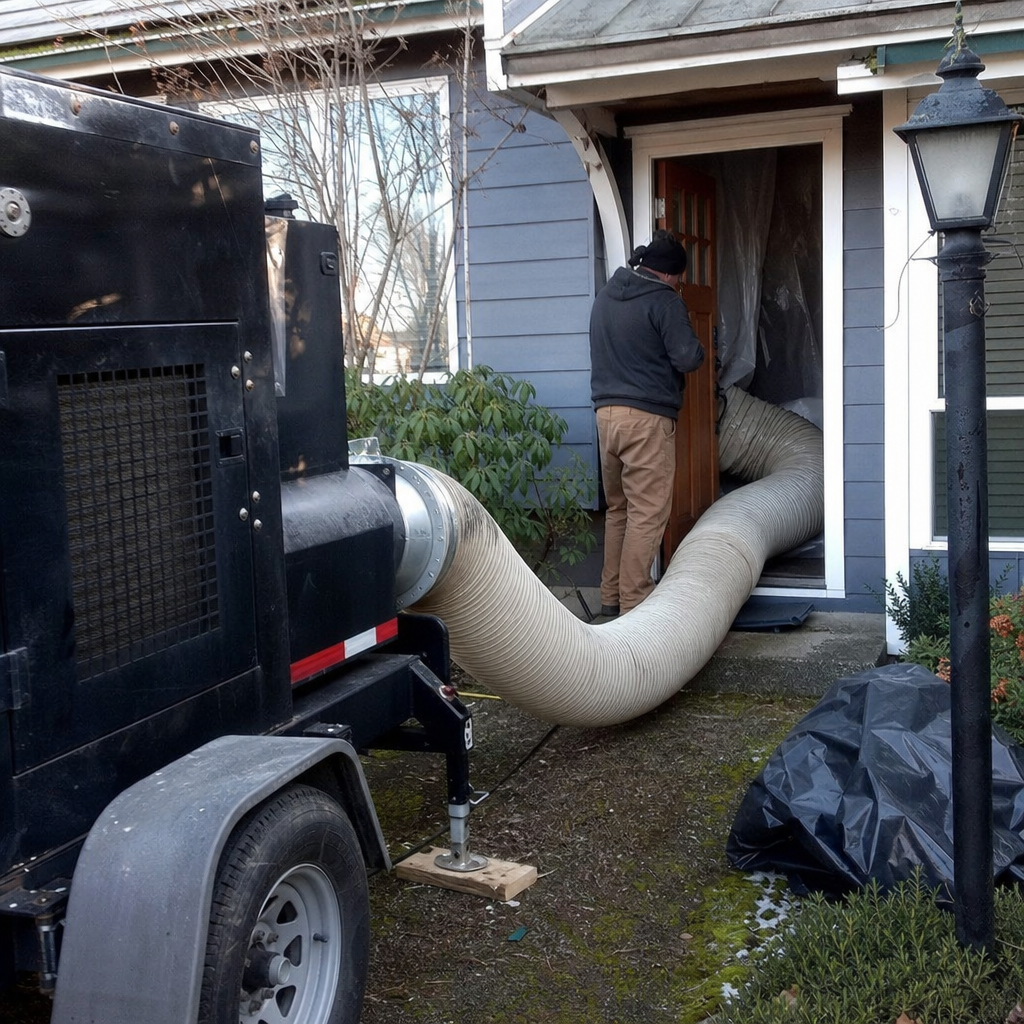
Nikro Vent Sanitizing: The Seattle Owner’s Guide
We stock and install Nikro-compatible vent sanitizing equipment for residential duct systems across Seattle, with most jobs completed same-day and installed pricing typically running $280-$520 depending on system size and access. If your Nikro sanitizer isn’t producing fog, won’t hold pressure, or you’re noticing musty airflow returning after a recent duct cleaning, the issue is usually a failed pump, clogged nozzle, or cracked solution reservoir. Homeowners in older Seattle neighborhoods like Ballard, Wallingford, and West Seattle tend to discover this when they run their HVAC after a rainy stretch and smell something that shouldn’t be there.
Which Nikro Models This Applies To
Nikro’s vent sanitizing line breaks down into a few distinct series, and matching the right replacement matters more than you’d think. The NIKRO 862xxx series portable foggers use a diaphragm pump rated for 40 PSI with a 1.5-gallon poly tank, while the NIKRO 860xxx truck-mounted units run a higher-output piston pump at 125 PSI with a 5-gallon stainless reservoir. The fittings differ: the portable line uses ¼-inch quick-connect nozzles, and the truck units take ⅜-inch NPT threaded tips. We’ve seen homeowners order the wrong pump head because both series use a similar black housing, but the mounting pattern and voltage are completely different.
To identify yours, check the metal spec plate on the pump housing or the underside of the tank. You’re looking for a six-digit model number starting with 860 or 862. If the label’s worn off, measure the tank capacity and note whether your unit plugs into standard 120V or ties into 12V vehicle power. For OEM parts, Nikro ships from Illinois with a 5-7 day lead time. We also source quality aftermarket equivalents from certified HVAC suppliers that match PSI and flow specs at a lower price point, and we warranty the install either way. Bellows Air Duct & Vent Co. of Seattle is an independent service provider, not affiliated with Nikro.
Signs Your Nikro Vent Sanitizing Is Failing
- The unit runs but produces weak or intermittent fog. This usually points to a worn diaphragm in the pump or calcium buildup in the nozzle from Seattle’s moderately hard water. The diaphragm flexes thousands of times per job and develops micro-tears after roughly 18-24 months of regular use.
- You hear the motor laboring or cycling on and off rapidly. The pressure switch is likely failing, or there’s an air leak in the suction line drawing the pump dry. In crawl spaces around Capitol Hill and Queen Anne, we’ve found cracked intake hoses where they contact sharp foundation edges.
- Solution leaks from the tank base or pump housing. The poly tanks on portable units stress-crack around the threaded bung after repeated overtightening. Truck-mounted stainless tanks fare better, but their O-ring seals harden in cold weather and weep.
- A chemical smell lingers in ducts after sanitizing. The atomizing nozzle is worn or partially blocked, producing larger droplets that don’t evaporate before reaching registers. This wastes solution and leaves residue that can attract dust.
- The unit won’t power on at all. On 120V portables, the inline GFI plug fails frequently in damp Pacific Northwest conditions. On 12V truck units, corrosion at the battery terminal connection is almost always the culprit.
Replacement Cost & What’s Included
In the Seattle market, a complete Nikro vent sanitizing replacement runs $280-$520 installed. Here’s how that breaks down:
- Pump assembly (diaphragm or piston): $95-$180 for aftermarket, $140-$240 OEM
- Tank replacement (portable poly): $65-$110
- Nozzle and wand set: $45-$85
- Labor, testing, and camera verification: $75-$185 depending on access and duct configuration
What drives the range: crawl space access in homes with post-war foundations, multi-zone systems requiring multiple sanitizing points, and whether we’re matching to existing Nikro hardware or adapting fittings. We disclose the full number before lifting a tool. Every replacement carries our 90-Day Done Right Promise, and we camera-inspect the duct run after install to verify even fog distribution. No surprises on the bill.
DIY or Call Us?
There’s a safe middle ground here, and then there’s where it gets messy. A homeowner can check the GFI plug, inspect the intake hose for obvious cracks, and clean a clogged nozzle with warm water and a soft brush. Those three things solve maybe 30% of what we get called for.
Where DIY goes wrong: the pump diaphragm requires precise torque on reassembly, overtighten it and you’ll strip the housing. The pressure switch needs calibration against your specific nozzle count, or you’ll either under-treat the ducts or over-pressurize and blow solution past the register seals. And if you’re working with any electrical component in a damp crawl space, the risk isn’t worth the savings. We’ve been called to jobs in Magnolia and Ravenna where a well-meaning owner cracked the tank bung trying to swap a pump that was actually fine, turning a $180 repair into a $420 replacement. If you’re not certain what’s failed, call us at (833) 700-5198 and we’ll diagnose it without pressure.
FAQs
With regular use on residential systems, expect 3-5 years from the pump and 5-7 from the tank. Seattle’s moderate humidity is actually easier on the electronics than desert climates, but the winter condensation in unconditioned utility spaces accelerates connector corrosion. Call (833) 700-5198 for an exact assessment of your unit.
Often yes, if the failure is isolated to the diaphragm, nozzle, or pressure switch. We carry rebuild kits for common pump models and can usually source oddball parts within 48 hours. Replacement makes more sense when multiple components are worn or the tank itself is compromised. Estimates are free.
Most residential replacements take 45-90 minutes, including removal of the old unit, install, pressure testing, and camera verification of fog distribution. Jobs in tight crawl spaces or with hardwired electrical may run closer to two hours. We stock the common Nikro pump assemblies and nozzles on our trucks, so we’re not waiting on parts.
We stock diaphragm pump assemblies, pressure switches, nozzles, and portable poly tanks for the 860 and 862 series on every service vehicle. Less common items like truck-mounted stainless reservoirs or 12V wiring harnesses we can have within 24-48 hours. If you have a model number, call (833) 700-5198 and we’ll confirm before we roll.
We stand behind the work because we have been doing it long enough to know what standing behind it actually means. If your Nikro vent sanitizer is giving you trouble, or you’re not sure whether it’s the pump, the nozzle, or something else entirely, give us a call at (833) 700-5198. We’ll answer, we’ll listen, and we’ll give you a straight number before we start. Colin Merritt and the team at Bellows Air Duct & Vent Co. of Seattle have been handling duct systems in this city since 2012, and we plan to keep doing it right.
Written by Colin Merritt, Owner, Bellows Air Duct & Vent Co. of Seattle at Bellows Air Duct & Vent Co. of Seattle, serving Seattle and nearby areas.