
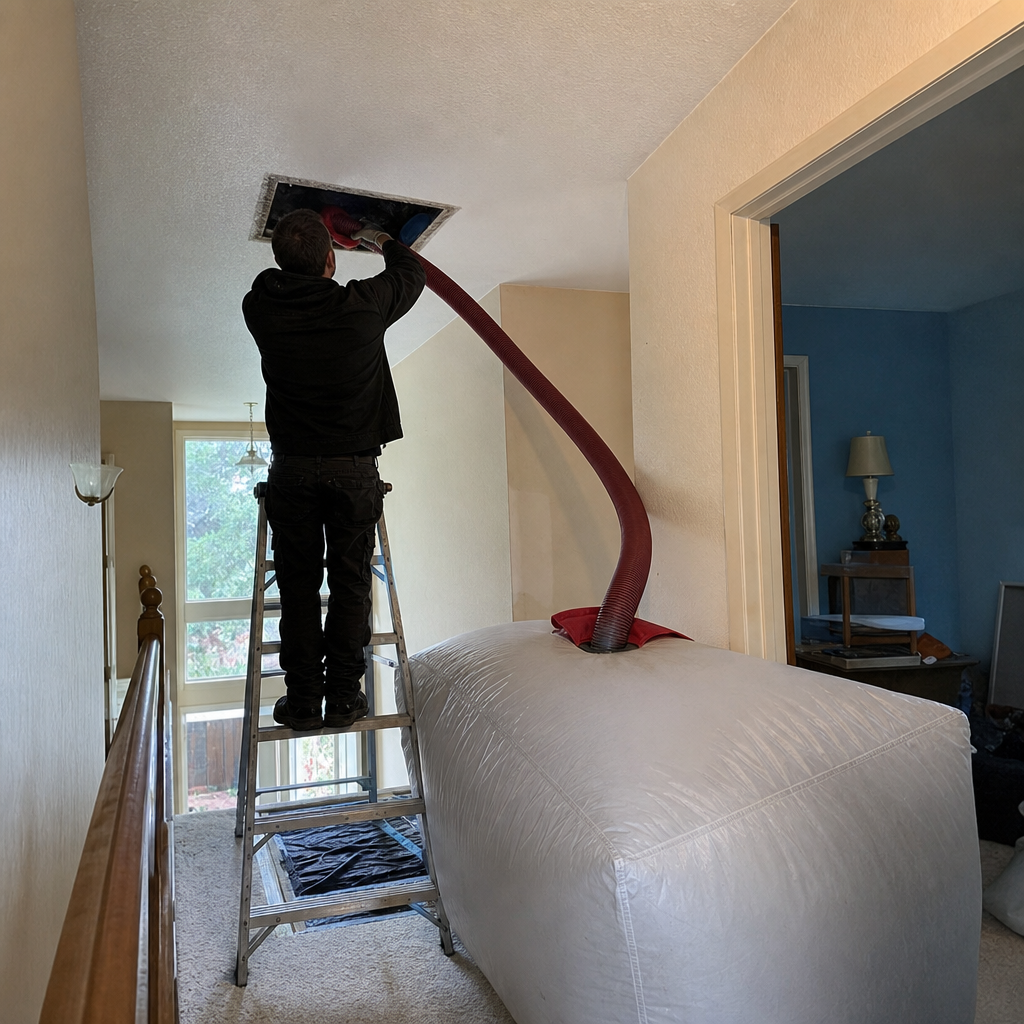
Rotobrush Vent Sanitizing: The Seattle Owner’s Guide
Rotobrush vent sanitizing in Seattle typically runs $280-$450 installed, depending on system size and access, and we stock the compatible kits for same-day replacement on most calls. Most homeowners notice the problem when their vents still smell musty after a standard cleaning, or when a Rotobrush system they already own stops distributing sanitizer evenly through the duct run. In older Seattle homes, especially in neighborhoods like Ballard and Wallingford with original galvanized ductwork, the sanitizing nozzles and feed lines clog with scale and biofilm faster than the manufacturer rates suggest.
Which Rotobrush Models This Applies To
The vent sanitizing assemblies we install are compatible with Rotobrush’s BrushBeast series, the standard RotoVent line, and most contractor-grade portable units sold from 2012 forward. You’ll find the model plate on the motor housing, usually a stamped metal tag or a foil label near the power switch. The critical spec is the sanitizer output port size: BrushBeast units use a 3/8-inch quick-connect, while older RotoVent models take a 1/4-inch barbed fitting. Mix those up and you’ll have a leak inside the plenum that you won’t see until it drips through a ceiling register.
We carry both OEM Rotobrush sanitizer kits and quality aftermarket equivalents from Nikro and Abatement Technologies. The OEM kits include the full nozzle tree and braided feed line; aftermarket units match the flow rate and droplet spec but may use a slightly different mounting bracket. For Seattle’s climate, where we see more mold-resistant coating requests than sun-belt markets, the aftermarket Nikro units perform identically at a lower parts cost. We always show you both options before we start.
Signs Your Rotobrush Vent Sanitizing Is Failing
- Uneven sanitizer distribution. One room smells treated while the next still carries the original odor. This usually means a clogged or cracked nozzle downstream, or a failing check valve that’s letting sanitizer pool in the low spots of the duct run instead of atomizing properly.
- Visible residue around registers. Sticky film or white buildup on vent louvers means the droplet size has gone too large. The nozzle orifice is worn or partially blocked, and instead of a fine mist you’re getting splatter that settles before it travels.
- Pump runs but no fluid moves. The peristaltic pump tube inside the Rotobrush unit has flattened or cracked. These tubes have a 2-3 year service life in normal use, but in Seattle’s hard-water pockets, like parts of Queen Anne and Magnolia, mineral buildup can shorten that to 18 months.
- Intermittent operation during a cleaning cycle. The pressure switch or flow sensor is failing, often from moisture intrusion where the wiring passes through the housing. This is more common on units that get hosed down for cleaning rather than wiped.
- Chemical smell from the unit itself, not the ducts. The sanitizer reservoir or feed line has cracked, and fluid is leaking into the motor compartment. This is a fire and electrical hazard. Shut the unit off and unplug it.
Replacement Cost & What’s Included
| Service | Price Range |
|---|---|
| Rotobrush sanitizer kit (OEM), installed | $340-$450 |
| Rotobrush-compatible aftermarket kit, installed | $280-$380 |
| Pump tube replacement only | $180-$240 |
| Full system diagnostic with camera inspection | $89 (credited toward repair) |
The range depends on three things: whether we can reach the sanitizer tap point without cutting access panels, whether your duct material needs adapter fittings, and whether we’re replacing a single failed component or the full assembly. We inspect with a camera before quoting, so the number you hear on the phone is the number on the invoice. Every sanitizer installation carries our 90-Day Done Right Promise - if the treatment doesn’t hold or the hardware fails, we return at no charge with no paperwork to file.
DIY or Call Us?
There’s a safe middle ground here, and then there’s where it gets foolish. A homeowner can check the reservoir level, inspect visible feed lines for cracks, and verify that the power indicator lights are responding. What you should not do is open the pump housing or attempt to clear a clogged nozzle with a wire or drill bit. The peristaltic pump runs on 120V, and the sanitizing chemicals are respiratory irritants in concentrated form. We’ve also seen homeowners cross-thread the quick-connect fittings and crack the plastic manifold, turning a $280 job into a $600 one.
We’re not affiliated with Rotobrush, but we’ve installed and serviced their equipment in Seattle homes since the BrushBeast first came to market. If your unit is under manufacturer warranty, we’ll tell you straight and point you toward their channel. If it’s out of warranty or you need it working today, call (833) 700-5198. We stock the common kits on every truck, and most replacements are done in a single visit.
FAQs
In Seattle’s climate, expect 3-5 years from a complete sanitizer assembly and 18-24 months from the pump tube specifically. The coastal moisture and temperature swings mean more condensation cycles inside the ductwork, which accelerates wear on seals and nozzles. Call (833) 700-5198 if you’re past the three-year mark and noticing performance drop-off - estimates are free.
Sometimes. A clogged nozzle can be cleaned, and a cracked feed line can be spliced if the damage is accessible. But if the pump tube is flattened or the pressure switch is erratic, repair is usually temporary and costs nearly as much as replacement. We camera-inspect first and tell you which path makes sense. Call (833) 700-5198 to schedule.
Most Rotobrush sanitizer replacements take 90 minutes to two hours, including the before-and-after camera inspection we do on every job. Tight crawl spaces or attic-mounted air handlers in older Seattle homes, like the bungalows in Phinney Ridge, can add 30-45 minutes. We complete most jobs in a single visit.
We carry OEM and aftermarket sanitizer kits, pump tubes, nozzles, and pressure switches for all common Rotobrush models on every service truck. If you have an uncommon or discontinued unit, we can typically source parts within 24 hours through our supply relationship with Nikro and Abatement Technologies. Call (833) 700-5198 with your model number and we’ll confirm before we dispatch.
We stand behind the work because we have been doing it long enough to know what standing behind it actually means. If your Rotobrush vent sanitizing system isn’t performing the way it should, or if you’re tired of guessing whether the job was done right, call (833) 700-5198. We’ll answer, we’ll show you what we find, and we’ll give you one honest price before we start.
Written by Colin Merritt, Owner, Bellows Air Duct & Vent Co. of Seattle at Bellows Air Duct & Vent Co. of Seattle, serving Seattle and nearby areas.